
Introduction
Launching an online store in 2026 is easier than ever. Building one that customers trust, search engines rank, and shoppers actually buy from is the real challenge.
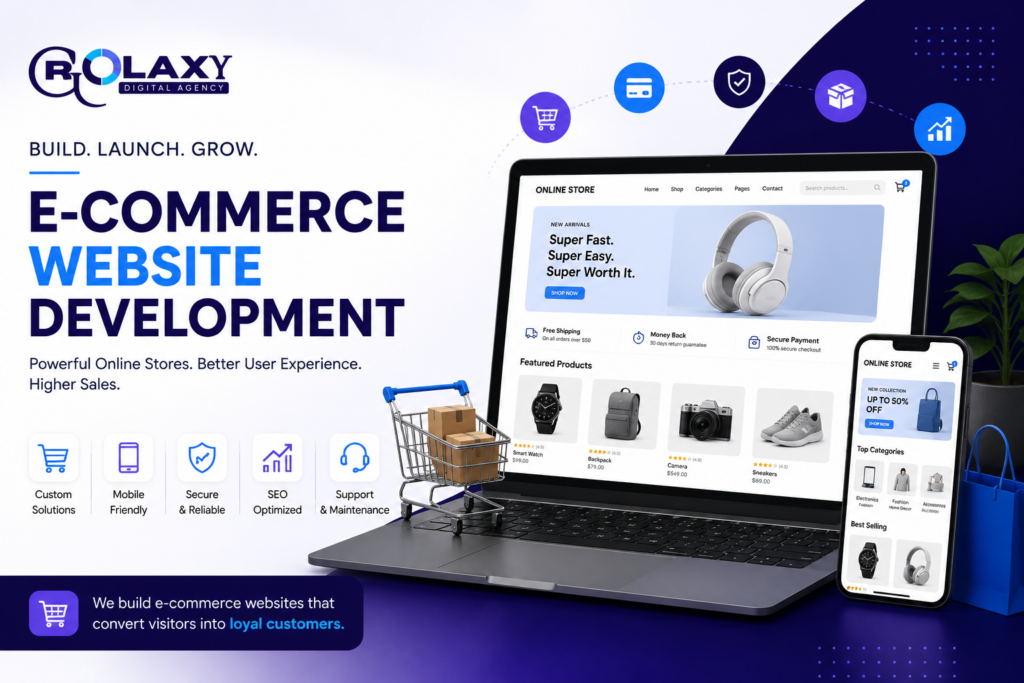
Every day, thousands of new online stores are launched. However, only a small percentage achieve sustainable growth because most businesses focus on building a website rather than creating a complete shopping experience.
Modern customers expect more than product listings. They want fast-loading pages, personalized recommendations, secure payment options, seamless mobile experiences, and frictionless checkout processes. A customer might discover a product on Instagram, compare prices on Google, ask questions on WhatsApp, read reviews, and complete a purchase within minutes. Businesses that fail to create a smooth journey across these touchpoints often lose potential customers.
The opportunity has never been bigger. With increasing internet penetration, widespread smartphone adoption, digital payment growth, and innovations such as ONDC, Indian businesses can now reach customers across the country and beyond.
A professionally developed e-commerce website is no longer just an online store—it is a sales engine, customer service platform, marketing hub, and growth asset operating 24/7.
What Is E-Commerce Website Development?
E-commerce website development is the process of designing, building, optimizing, and maintaining an online platform where businesses can sell products or services.
Unlike informational websites, e-commerce websites are designed specifically to facilitate transactions. They include product catalogs, shopping carts, payment gateways, inventory systems, customer accounts, order management, and marketing integrations.
Modern e-commerce development combines:
- User Experience (UX)
- User Interface (UI)
- Front-End Development
- Back-End Development
- Search Engine Optimization (SEO)
- Security Implementation
- Conversion Rate Optimization (CRO)
- Mobile Optimization
The goal is simple: attract visitors, build trust, and convert them into customers.
Why E-Commerce Matters More Than Ever in 2026
Consumer behavior has changed dramatically. Online shopping is now part of everyday life.
Customers purchase:
- Fashion products
- Electronics
- Home décor
- Beauty products
- Groceries
- Educational courses
- Digital products
- Subscription services
Several trends continue to drive e-commerce growth:
Convenience
Customers can shop anytime and anywhere without visiting physical stores.
Mobile Commerce Growth
Most online purchases now begin on smartphones.
AI-Powered Personalization
Modern stores recommend products based on customer behavior and preferences.
Digital Payments
UPI, wallets, cards, and Buy Now Pay Later solutions have simplified online transactions.
Wider Reach
Businesses can expand nationally and internationally without opening physical locations.
These advantages make e-commerce one of the most powerful growth opportunities available to businesses today.
The Evolution of E-Commerce
Modern e-commerce is no longer limited to websites.
A typical customer journey may look like this:
- Discover a product on Instagram.
- Visit the online store.
- Read reviews.
- Add the product to a wishlist.
- Receive a WhatsApp reminder.
- Return through Google Search.
- Complete the purchase using UPI.
This demonstrates why successful businesses integrate websites with social media, SEO, email marketing, WhatsApp Business, analytics tools, and customer support platforms.
The website becomes the central hub connecting every customer touchpoint.
Types of E-Commerce Business Models
Business-to-Consumer (B2C)
Businesses sell products directly to customers.
Examples include clothing stores, electronics retailers, and cosmetic brands.
Business-to-Business (B2B)
Businesses sell products or services to other businesses.
These websites often require custom pricing, bulk ordering systems, and account-based purchasing.
Consumer-to-Consumer (C2C)
Platforms where individuals buy and sell products to one another.
Direct-to-Consumer (D2C)
Brands sell directly to customers without relying on distributors or retailers.
D2C businesses benefit from greater control over customer relationships, branding, and profit margins.
Core Components of a Successful E-Commerce Website
A modern online store includes several critical components that work together to deliver an excellent shopping experience.
Product Catalog
A well-structured product catalog should include:
- Product titles
- Detailed descriptions
- High-quality images
- Videos
- Pricing information
- Product specifications
- Stock availability
Shopping Cart
Customers should be able to:
- Add products
- Update quantities
- Save items for later
- Review orders easily
Payment Gateway
Support multiple payment options such as:
- UPI
- Credit Cards
- Debit Cards
- Digital Wallets
- Net Banking
- Buy Now Pay Later
Inventory Management
Real-time inventory tracking helps prevent overselling and improves operational efficiency.
Customer Accounts
Accounts allow customers to:
- Track orders
- Save addresses
- View purchase history
- Manage preferences
These features improve convenience and encourage repeat purchases.
Choosing the Right E-Commerce Platform

Selecting the right platform is one of the most important decisions in e-commerce website development. The platform you choose affects website performance, scalability, security, customization options, maintenance requirements, and long-term growth potential.
Many businesses choose a platform based solely on price or popularity. However, the best platform depends on your business goals, product catalog size, budget, technical requirements, and future expansion plans.
A startup launching its first online store has different needs than a large enterprise managing thousands of products and multiple sales channels.
Before choosing a platform, businesses should evaluate:
- Budget
- Product volume
- Customization requirements
- SEO needs
- Technical expertise
- Scalability goals
- Third-party integrations
- Maintenance responsibilities
Choosing the right platform early can save significant time and money in the future.
Shopify vs WooCommerce vs Magento
The three most popular e-commerce platforms each serve different business needs.
| Feature | Shopify | WooCommerce | Magento (Adobe Commerce) |
| Best For | Startups & Growing Brands | WordPress Users & Content-Driven Businesses | Large Enterprises |
| Ease of Use | Very Easy | Moderate | Advanced |
| Customization | Good | Excellent | Excellent |
| SEO Flexibility | Good | Excellent | Excellent |
| Hosting | Included | Self-Hosted | Self-Hosted |
| Maintenance | Low | Moderate | High |
| Scalability | High | High | Very High |
| Ownership | Limited | Full Control | Full Control |
| Initial Setup | Fast | Moderate | Complex |
| Development Cost | Lower | Moderate | Higher |
Shopify Development
Shopify is one of the world’s most popular e-commerce platforms because of its simplicity and reliability.
Businesses can launch stores quickly without worrying about hosting, software updates, or server management. Shopify handles most technical aspects, allowing business owners to focus on products, marketing, and sales.
Shopify is ideal for startups, D2C brands, and businesses looking for a quick and hassle-free launch.
WooCommerce Development
WooCommerce is built on WordPress and offers unmatched flexibility.
It allows businesses to customize nearly every aspect of their online store while maintaining complete ownership of their website.
WooCommerce is especially effective for brands that want to combine content marketing, blogging, and e-commerce growth strategies under one platform.
Magento (Adobe Commerce) Development
Magento is designed for large-scale businesses and enterprises.
It supports advanced functionality such as multi-store management, international commerce, custom workflows, and extensive product catalogs.
Although Magento requires greater technical expertise and investment, it provides exceptional scalability and flexibility for businesses with complex requirements.
Mobile Commerce (M-Commerce): The New Standard
Consumers no longer shop exclusively on desktop computers.
Today, smartphones have become the primary shopping device for millions of users worldwide. A customer may discover a product while scrolling through Instagram, compare alternatives during a commute, and complete a purchase from a smartphone within minutes.
This shift has transformed mobile commerce into one of the most important aspects of modern e-commerce development.
A mobile-friendly website should provide:
- Responsive design
- Fast loading speed
- Touch-friendly navigation
- Mobile payment compatibility
- Streamlined checkout experience
Google’s mobile-first indexing also means mobile optimization directly impacts search rankings.
Businesses that fail to prioritize mobile experiences risk losing significant revenue opportunities.
AI-Powered E-Commerce Experiences
Artificial Intelligence has become a core component of successful e-commerce businesses.
Modern customers expect personalized shopping experiences, and AI helps businesses deliver them at scale.
AI-powered e-commerce websites can provide:
- Personalized product recommendations
- Intelligent product suggestions
- Automated customer support
- Predictive inventory management
- Dynamic pricing strategies
- Advanced customer segmentation
Instead of showing every customer the same products, AI helps businesses create highly relevant shopping experiences tailored to individual preferences.
This improves customer satisfaction, engagement, and conversion rates.
AI-Powered Search: The Future of Product Discovery
Traditional search bars rely on exact keywords.
Modern customers increasingly use conversational searches.
For example, instead of typing:
“Running shoes”
A customer may search:
“I need comfortable shoes for walking and jogging every day.”
AI-powered search engines understand intent rather than exact wording.
This enables online stores to provide more relevant results and improve product discovery.
Benefits include:
- Better search experiences
- Increased product visibility
- Higher conversion rates
- Reduced bounce rates
AI-powered search is rapidly becoming a standard feature for modern online stores.
Social Commerce: Where Shopping Meets Social Media
Today’s customer journey often begins on social media.
Platforms such as Instagram, Facebook, YouTube, and Pinterest have evolved into powerful sales channels.
Customers frequently discover products through social content before ever visiting a website.
Social commerce allows businesses to:
- Increase product visibility
- Improve engagement
- Generate impulse purchases
- Build stronger customer relationships
Successful e-commerce brands integrate social platforms directly with their websites to create seamless shopping experiences.
WhatsApp Commerce: A Powerful Tool for Indian Businesses
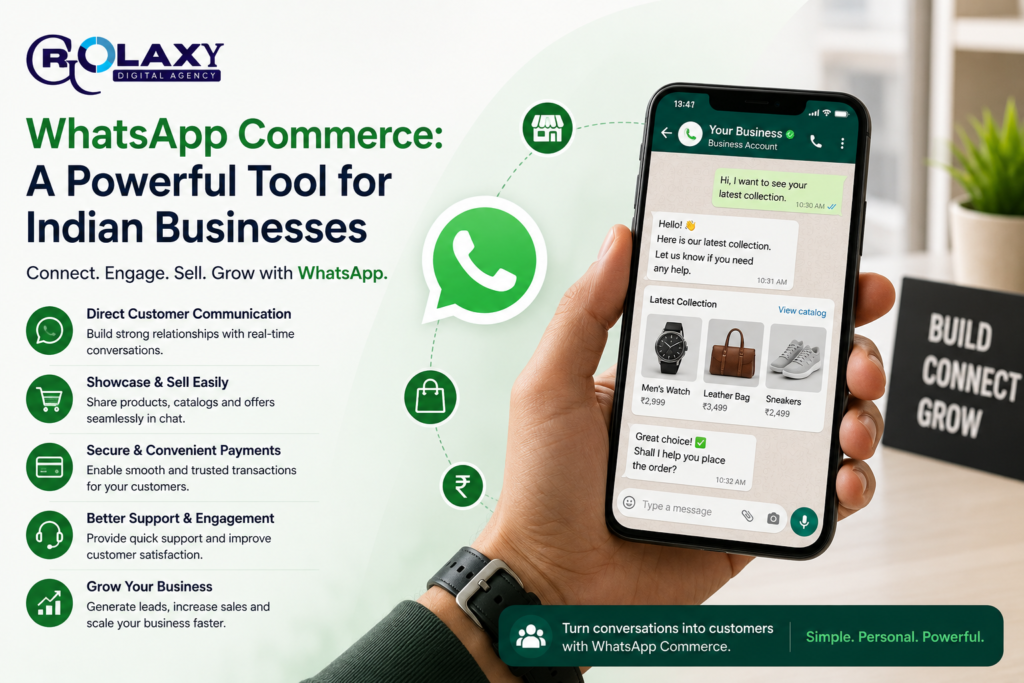
WhatsApp has become one of the most effective communication channels for businesses in India.
Customers prefer WhatsApp because it is convenient, familiar, and immediate.
Modern e-commerce businesses use WhatsApp for:
- Product inquiries
- Customer support
- Order confirmations
- Shipping updates
- Cart recovery campaigns
- Personalized recommendations
For example, a customer who abandons a cart can receive an automated WhatsApp reminder with a direct checkout link.
This simple strategy often helps recover lost sales and improve conversion rates.
ONDC and the Future of Indian E-Commerce
One of the biggest developments in India’s digital commerce ecosystem is ONDC (Open Network for Digital Commerce).
Traditionally, businesses relied heavily on major marketplaces to reach customers online.
ONDC aims to create an open network where buyers and sellers can interact across multiple platforms without being restricted to a single marketplace.
Benefits of ONDC include:
- Greater product visibility
- Reduced marketplace dependency
- Expanded customer reach
- Improved competitiveness
- New growth opportunities
Businesses preparing for the future should consider how their e-commerce websites can integrate with emerging digital commerce networks such as ONDC.
E-Commerce SEO: Building Sustainable Organic Growth
Launching an online store is only the beginning.
Customers must be able to find your products before they can make purchases.
Search Engine Optimization (SEO) helps businesses improve visibility in search results and attract qualified traffic.
Unlike paid advertising, SEO continues delivering value long after optimization efforts are implemented.
A successful e-commerce SEO strategy includes:
- Technical SEO
- Keyword research
- Product page optimization
- Category page optimization
- Internal linking
- Content marketing
- User experience improvements
Businesses that invest in SEO early often gain a long-term competitive advantage.
Keyword Research for E-Commerce Websites
Keyword research helps businesses understand how customers search for products online.
The most effective strategies target multiple keyword categories.
Commercial Keywords
Examples:
- Buy running shoes online
- Best gaming laptop
- Organic skincare products
Product Keywords
Examples:
- Wireless Bluetooth headphones
- Men’s leather wallet
- Fitness smartwatch
Long-Tail Keywords
Examples:
- Best wireless headphones under ₹5,000
- Comfortable office chair for back pain
Long-tail keywords often generate highly qualified traffic because they reflect strong purchase intent.
Product Page Optimization
Product pages are among the most important assets of an online store.
Every product page should be optimized for both customers and search engines.
Key elements include:
High-Quality Product Titles
Clear and descriptive titles improve discoverability.
Unique Product Descriptions
Original descriptions help improve rankings and differentiate products.
Professional Product Images
High-quality visuals build trust and improve purchasing confidence.
Product Videos
Videos help customers understand products more effectively.
Customer Reviews
Reviews increase trust and provide valuable user-generated content.
Well-optimized product pages can significantly improve organic traffic, engagement, and sales.
Why E-Commerce SEO Is a Long-Term Investment
Many businesses rely heavily on paid advertising because it produces immediate results.
While advertising is important, it requires ongoing spending.
SEO creates a sustainable traffic source that can continue generating visitors and sales for years.
Businesses that consistently invest in SEO often reduce customer acquisition costs while improving profitability.
The most successful online stores combine SEO, content marketing, social commerce, and paid advertising to create multiple growth channels.
Creating a Connected Commerce Ecosystem
Modern e-commerce success depends on more than a website alone.
The highest-performing brands create connected ecosystems that include:
- Search engines
- Social media platforms
- WhatsApp communication
- AI-powered tools
- Email marketing
- ONDC opportunities
- Customer support systems
Businesses that integrate these channels effectively create stronger customer experiences and sustainable growth opportunities.
Why Traffic Alone Doesn’t Generate Sales
Many business owners believe that increasing website traffic automatically leads to more revenue. While attracting visitors is important, traffic alone does not guarantee sales.
Imagine an online store receiving 10,000 visitors every month. If only 1% of visitors make a purchase, the store generates 100 orders. However, if the conversion rate increases to 3%, the same traffic can generate 300 orders without spending additional money on advertising.
This is why successful e-commerce businesses focus on both customer acquisition and conversion optimization.
The goal is not simply to attract visitors—it is to convert those visitors into paying customers and long-term brand advocates.
Conversion Rate Optimization (CRO): Turning Visitors into Customers
Conversion Rate Optimization (CRO) is the process of improving website elements that influence purchasing decisions.
Every aspect of an online store affects conversions, including:
- Product pages
- Website design
- Navigation
- Checkout flow
- Trust signals
- Website speed
- Mobile experience
The objective is to remove friction and create a seamless buying journey.
Even small improvements in conversion rates can have a significant impact on overall revenue and profitability.
High-Quality Product Photography
Customers cannot physically inspect products online, which makes product images extremely important.
Professional product photography should:
- Display products from multiple angles
- Highlight important features
- Demonstrate real-world usage
- Maintain consistent quality
High-quality visuals increase trust and help customers make confident purchasing decisions.
Product Videos Increase Engagement
Video content continues to become more important in e-commerce.
A short product demonstration can communicate information that images and text cannot.
Product videos help customers:
- Understand product functionality
- Visualize product dimensions
- Evaluate quality
- See products in practical situations
Websites that use product videos often experience higher engagement and improved conversion rates.
Building Trust Through Social Proof
Trust is one of the most powerful factors influencing online purchases.
Customers are more likely to buy from websites that appear credible and trustworthy.
Important trust-building elements include:
- Customer reviews
- Ratings
- Testimonials
- Security badges
- Return policies
- Money-back guarantees
- Verified business information
These trust signals help reduce uncertainty and encourage purchasing decisions.
Simplifying the Checkout Process
Many businesses lose sales because their checkout process is too complicated.
Common reasons for cart abandonment include:
- Forced account creation
- Long forms
- Unexpected charges
- Limited payment methods
- Slow-loading checkout pages
Modern e-commerce development focuses on reducing friction and making checkout as fast and simple as possible.
Website Speed Optimization: Every Second Matters
Website speed directly affects user experience, search rankings, and conversion rates.
Modern consumers expect websites to load almost instantly.
When pages load slowly, visitors often leave before viewing products.
Studies consistently show that slow websites experience:
- Higher bounce rates
- Lower engagement
- Reduced conversions
- Lower customer satisfaction
For e-commerce businesses, website speed directly impacts revenue.
Image Optimization
Large images are one of the most common causes of slow websites.
Modern image optimization techniques reduce file sizes while maintaining visual quality.
Content Delivery Networks (CDNs)
CDNs distribute website content across multiple servers around the world.
This helps deliver content faster regardless of visitor location.
Code Optimization
Clean and efficient code improves performance and reduces unnecessary processing.
Browser Caching
Caching stores frequently used resources and improves loading speed for returning visitors.
High-Performance Hosting
Reliable hosting infrastructure is essential for maintaining website speed, uptime, and stability.
User Experience (UX) and User Interface (UI): The Foundation of Online Success
Many businesses focus heavily on aesthetics while overlooking usability.
An attractive website may grab attention, but usability determines whether customers stay and complete purchases.
User Experience (UX) focuses on how customers interact with a website.
User Interface (UI) focuses on the visual design that supports those interactions.
The most successful online stores balance both.
Clear Navigation
Customers should be able to find products quickly without confusion.
Logical Product Categories
Well-organized categories improve browsing experiences and reduce frustration.
Mobile-Friendly Design
Responsive layouts ensure seamless experiences across smartphones, tablets, and desktops.
Consistent Branding
Consistency strengthens trust and creates a professional appearance.
Accessibility
Websites should be usable by people with different abilities and technical skill levels.
Businesses that prioritize UX and UI often achieve higher customer satisfaction and better conversion rates.
E-Commerce Security: Protecting Customers and Business Data
Security is one of the most important components of e-commerce website development.
Customers trust online stores with sensitive information such as payment details, addresses, and contact information.
A security breach can damage customer trust and significantly impact business reputation.
Professional e-commerce websites implement multiple layers of protection.
SSL Certificates
SSL encryption secures communication between users and websites.
Customers also recognize SSL certificates as indicators of trustworthiness.
Secure Payment Gateways
Trusted payment gateways reduce transaction risks and improve customer confidence.
Firewall Protection
Firewalls help prevent unauthorized access and malicious attacks.
Malware Monitoring
Continuous monitoring helps identify and address security threats before they cause damage.
Regular Updates
Keeping software and plugins updated reduces vulnerabilities and improves overall security.
Security is not a one-time task. It requires continuous monitoring and maintenance.
The Complete E-Commerce Website Development Process
Building a successful online store involves much more than design and coding.
Professional development follows a structured process designed to ensure long-term success.
Step 1: Business Discovery and Strategy
The project begins by understanding:
- Business goals
- Target audience
- Product offerings
- Competitive landscape
- Growth objectives
This information shapes every development decision.
Step 2: Planning and Wireframing
Developers and designers create the website structure and user journey.
Wireframes provide a visual blueprint before development begins.
Step 3: UI/UX Design
Designers create visually appealing interfaces that focus on usability and conversions.
Step 4: Development
Developers build the website and integrate essential functionality such as:
- Product management
- Payment gateways
- Shipping systems
- Customer accounts
- Inventory management
Step 5: Testing and Quality Assurance
Before launch, the website undergoes extensive testing.
Testing includes:
- Mobile responsiveness
- Browser compatibility
- Security testing
- Payment functionality
- Speed optimization
Step 6: Launch
After testing is completed, the website is deployed to a live environment.
Step 7: Ongoing Maintenance and Optimization
A successful e-commerce website requires continuous improvement.
Ongoing maintenance includes:
- Security updates
- Performance monitoring
- SEO improvements
- Feature enhancements
- Content updates
Regular optimization helps businesses remain competitive in an evolving digital marketplace.
How Much Does E-Commerce Website Development Cost in India?
One of the most frequently asked questions is:
“How much does it cost to build an e-commerce website?”
The answer depends on several factors, including design complexity, functionality, integrations, and customization requirements.
Basic E-Commerce Websites
Suitable for startups and small businesses.
Typically include:
- Product catalog
- Shopping cart
- Payment integration
- Basic design customization
Growth-Oriented Online Stores
Designed for businesses planning to scale.
These websites often include:
- Advanced functionality
- Marketing integrations
- Enhanced UX
- Automation tools
- Analytics systems
Custom E-Commerce Solutions
Large businesses often require:
- Custom workflows
- Marketplace functionality
- ERP integrations
- Multi-vendor systems
- Enterprise-level security
While custom development requires greater investment, it provides unmatched flexibility and scalability.
Businesses should view e-commerce website development as a long-term investment rather than a one-time expense.
Why Data and Analytics Matter
One of the greatest advantages of e-commerce is the ability to measure everything.
Analytics provide valuable insights into:
- Customer behavior
- Traffic sources
- Popular products
- Conversion rates
- Cart abandonment patterns
This data helps businesses make informed decisions and continuously improve performance.
Companies that leverage analytics effectively often outperform competitors because they understand their customers better.
Preparing for the Future of E-Commerce
The future of online shopping will be shaped by emerging technologies and changing customer expectations.
Businesses should prepare for innovations such as:
- Artificial Intelligence
- Voice Commerce
- Augmented Reality (AR)
- Predictive Analytics
- Personalized Shopping Experiences
- Conversational Commerce
The businesses that adapt quickly to these trends will be better positioned for long-term success.
Why Businesses Choose Grolaxy for E-Commerce Website Development
At Grolaxy, we understand that an e-commerce website is more than an online store.
It is a growth engine that directly impacts customer acquisition, revenue generation, and long-term business success.
Our approach combines:
- Strategic planning
- Modern design
- SEO best practices
- Conversion optimization
- Mobile-first development
- Security implementation
- Scalable architecture
We create online stores designed to attract customers, increase sales, and support sustainable growth.
Whether you are launching a new online business or upgrading an existing platform, our team focuses on building solutions tailored to your specific goals.
Common E-Commerce Website Mistakes That Hurt Sales
Even businesses with excellent products can struggle online if their website creates a poor shopping experience. Many e-commerce stores fail not because of weak marketing, but because of avoidable mistakes that reduce conversions and damage customer trust.
Ignoring Mobile Users
In 2026, most online shopping journeys begin on a smartphone. A website that is not optimized for mobile devices will lose potential customers quickly.
Mobile-friendly websites should provide:
- Fast loading speeds
- Easy navigation
- Responsive layouts
- Mobile payment compatibility
- Simple checkout experiences
A mobile-first approach is no longer optional—it is essential.
Slow Website Performance
Website speed has a direct impact on user experience and sales.
Customers expect pages to load within seconds. Slow websites often experience higher bounce rates, lower engagement, and reduced conversions.
Regular performance optimization helps businesses deliver better experiences and improve search engine rankings.
Weak Product Descriptions
Generic product descriptions provide little value to customers and search engines.
Effective descriptions explain:
- Product benefits
- Features
- Specifications
- Use cases
- Customer concerns
Detailed and unique descriptions improve both SEO and conversion rates.
Complicated Checkout Processes
A lengthy or confusing checkout process is one of the biggest causes of cart abandonment.
Customers should be able to complete purchases quickly without unnecessary steps or distractions.
Poor SEO Implementation
Without proper SEO, even the best online store may struggle to attract visitors.
SEO should be incorporated during development rather than treated as an afterthought.
Businesses that invest in SEO from the beginning often achieve stronger long-term results.
Advanced Growth Strategies for Modern E-Commerce Brands
Successful online stores continuously optimize customer acquisition, retention, and profitability.
Growth is achieved through a combination of technology, marketing, and customer experience improvements.
Personalization at Scale
Modern consumers expect personalized shopping experiences.
Artificial Intelligence allows businesses to recommend products based on:
- Browsing history
- Purchase behavior
- User interests
- Location data
Personalization increases engagement and often improves average order value.
Email Marketing Automation
Email marketing remains one of the highest-performing digital channels.
Automated campaigns can be used for:
- Welcome sequences
- Cart abandonment recovery
- Product recommendations
- Customer retention campaigns
- Loyalty program promotions
Well-executed email automation can generate substantial repeat revenue.
Loyalty and Rewards Programs
Retaining existing customers is often more cost-effective than acquiring new ones.
Loyalty programs encourage repeat purchases through:
- Reward points
- Exclusive discounts
- Referral bonuses
- VIP memberships
These initiatives increase customer lifetime value and strengthen brand loyalty.
Omnichannel Commerce
Modern customers interact with brands across multiple platforms.
Successful businesses create consistent experiences across:
- Websites
- Social media
- Marketplaces
- Physical stores
An omnichannel strategy improves customer satisfaction and brand consistency.
Future Trends Shaping E-Commerce Between 2026 and 2030
The e-commerce industry continues to evolve rapidly.
Businesses that understand emerging trends can stay ahead of competitors and adapt to changing customer expectations.
Artificial Intelligence Will Become Standard
AI is already transforming online shopping.
Future e-commerce websites will increasingly use AI for:
- Dynamic pricing
- Inventory forecasting
- Customer support
- Personalized marketing
- Product recommendations
- Content generation
Businesses that adopt AI strategically will gain significant advantages.
Voice Commerce Growth
Voice-enabled devices are becoming more common.
Customers are increasingly using voice assistants to:
- Search for products
- Compare options
- Reorder purchases
- Track deliveries
Optimizing for voice search will become an important part of e-commerce SEO.
Augmented Reality (AR) Shopping
AR technology allows customers to visualize products before purchasing.
Examples include:
- Trying on eyewear virtually
- Testing cosmetics digitally
- Viewing furniture inside a room
AR helps reduce uncertainty and improves purchasing confidence.
Hyper-Personalized Shopping Experiences
Future online stores will become increasingly personalized.
Customers will expect product recommendations, promotions, and content tailored specifically to their interests and behaviors.
Sustainable Commerce
Consumers are becoming more conscious about environmental responsibility.
Brands that demonstrate commitments to:
- Sustainable sourcing
- Eco-friendly packaging
- Ethical manufacturing
- Reduced environmental impact
can strengthen trust and improve customer loyalty.
Why Choose Grolaxy for E-Commerce Website Development?

Choosing the right development partner can significantly influence the success of your online business.
At Grolaxy, we focus on creating e-commerce websites that combine strategy, design, technology, and marketing expertise.
Our approach is centered around measurable business outcomes rather than simply building websites.
Strategy-Driven Development
Every project begins with understanding your business goals, audience, and competitive landscape.
SEO-Friendly Architecture
Our websites are built with search visibility in mind from day one.
Mobile-First Experiences
We ensure every online store performs flawlessly across devices.
Conversion-Focused Design
Every design decision is made with customer experience and revenue growth in mind.
Scalability and Flexibility
Our solutions are designed to support future expansion and evolving business needs.
Ongoing Support and Optimization
We help businesses continuously improve performance through maintenance, updates, and strategic enhancements.
Whether you need a Shopify store, WooCommerce website, custom e-commerce platform, or marketplace solution, Grolaxy can help transform your vision into a high-performing online business.
Frequently Asked Questions (FAQs)
1. What is e-commerce website development?
E-commerce website development is the process of creating online stores that allow businesses to sell products or services, process payments, manage inventory, and serve customers digitally.
2. Which platform is best for e-commerce?
The best platform depends on your business goals. Shopify is ideal for ease of use, WooCommerce offers flexibility, and Magento is suitable for enterprise-level operations.
3. How much does an e-commerce website cost in India?
Costs vary based on design, features, customization requirements, integrations, and platform selection.
4. How long does it take to build an online store?
Development timelines depend on project complexity. Basic stores may take a few weeks, while advanced custom platforms can require several months.
5. Why is SEO important for e-commerce websites?
SEO helps online stores attract organic traffic, improve search visibility, and reduce dependence on paid advertising.
6. What is mobile commerce?
Mobile commerce refers to online shopping conducted through smartphones and tablets.
7. How does AI improve e-commerce websites?
AI enhances personalization, customer support, product recommendations, inventory management, and search functionality.
8. What is ONDC?
ONDC (Open Network for Digital Commerce) is an initiative designed to create a more open and interconnected digital commerce ecosystem in India.
9. What payment methods should online stores support?
Businesses should support UPI, cards, net banking, digital wallets, and Buy Now Pay Later options.
10. Why is website speed important?
Fast websites improve user experience, conversion rates, and search engine rankings.
11. What security features are essential?
SSL certificates, secure payment gateways, firewalls, malware monitoring, and regular updates are critical.
12. What is conversion rate optimization?
CRO focuses on improving website elements that influence purchasing decisions and increase sales.
13. Why are customer reviews important?
Reviews build trust, influence buying decisions, and provide valuable user-generated content.
14. What is social commerce?
Social commerce involves selling products through social media platforms such as Instagram and Facebook.
15. What is WhatsApp Commerce?
WhatsApp Commerce uses WhatsApp Business for customer communication, support, marketing, and sales activities.
16. How can businesses reduce cart abandonment?
Businesses can simplify checkout processes, offer multiple payment options, improve transparency, and use recovery campaigns.
17. Why is personalization important?
Personalized experiences improve engagement, customer satisfaction, and revenue.
18. What role does analytics play in e-commerce?
Analytics helps businesses understand customer behavior, monitor performance, and make data-driven decisions.
19. How often should an e-commerce website be updated?
Websites should be updated regularly to maintain security, improve performance, and remain competitive.
20. Why choose Grolaxy for e-commerce development?
Grolaxy combines strategy, design, development, SEO, and conversion optimization to build online stores that generate measurable business results.
Conclusion
E-commerce website development is no longer just about creating an online store. In 2026, success requires a strategic combination of technology, customer experience, SEO, AI-powered personalization, mobile optimization, security, and continuous improvement.
Businesses that invest in professional e-commerce development gain more than a website—they build a scalable digital asset capable of generating sales, strengthening customer relationships, and supporting long-term growth.
From choosing the right platform and implementing SEO best practices to leveraging AI, ONDC, social commerce, and WhatsApp integration, every decision contributes to the overall success of an online business.
As digital commerce continues to evolve, businesses that adapt to changing customer expectations and emerging technologies will be best positioned for sustainable success.
If you are ready to build a secure, scalable, SEO-friendly, and conversion-focused online store, partnering with an experienced e-commerce development company can help turn your vision into reality and unlock new growth opportunities in the years ahead.